
This essay is part of our “People’s Guide to the Revolution” initiative for 2026. Visit our webpage for original content, events related to the 250th, and more.
By Lisa Krassner
President of the Massachusetts Historical Society
America’s independence was not simply declared. In the months, weeks, and days leading to July 4, 1776, the idea of breaking away from the Crown had to be imagined, debated, and ultimately embraced by those living through the uncertainty of revolution. The questions of what self-government might look like and what sacrifices it demands have resonated through the ages as our nation, at times courageously, at times imperfectly, has defined and re-defined the notion of equality declared on the first Independence Day.
Many of those earliest conversations unfolded here in Massachusetts, where revolutionary fervor and intellectual debate shaped the path towards independence. Consider, for example, two letters written to historian and poet Mercy Otis Warren that capture the uncertainty of early years of the Revolution.
“How long shall these Tyrants reign & the poor oppressed inhabitants of America groan under the Iron Yoke?” the patriot Hannah Winthrop asked, amid escalating tensions with Britain, in a September 1775 letter to Warren. The following March, James Bowdoin, the president of the Massachusetts Provincial Congress, discussed the necessity of separation in his own letter to Warren: “does it not seem necessary on our part, there should be a declaration of independence on Great Britain?”
These were not observers commenting from a safe distance. They were people living through history, playing their role in it, unsure of how it would end and what the consequences would be.

Their letters, and millions more preserved by the Massachusetts Historical Society, reveal how Americans have continually wrestled with the meaning of citizenship. Within these pages, founders debate representative government, abolitionists demand liberty’s full promise, and everyday citizens insist on a greater voice in public life.
In a May 1776 letter to Massachusetts jurist James Sullivan, John Adams noted that “the only moral Foundation of Government is the Consent of the People.” But then he asked the harder question: “But to what extent Shall We carry this Principle?” That tension between revolutionary ideals and democratic practice has shaped American life ever since.
Poet Phillis Wheatley was enslaved to a wealthy merchant in Boston, yet is one of the Revolution’s most eloquent voices. While asking God to watch over the patriots fighting for liberty, she could not and would not ignore the contradiction inherent in a nation proclaiming independence while tolerating human bondage: “But how, presumptuous shall we hope to find/ Divine acceptance with th’ Almighty mind — / While yet (O deed ungenerous!) they disgrace/ And hold in bondage Afric’s blameless race…”
Though the founders largely failed to answer her challenge, her voice remains part of the American record, a reminder that the struggle to define freedom did not end in 1776.
 The 19th century intensified these debates. The Compromise of 1850 and the Fugitive Slave Act forced Americans to confront the gap between national ideals and national practice. An 1845 broadside in the Society’s collections urged citizens to spend Independence Day “not in idle glorying… but in deep humiliation for her Disgrace and Shame.” Anthony Burns, captured in Boston and returned to enslavement, wrote plainly that July 4 was not a day of rejoicing for him or his race.
These documents are uncomfortable by design. They show that citizenship has always required vigilance, courage, and participation.
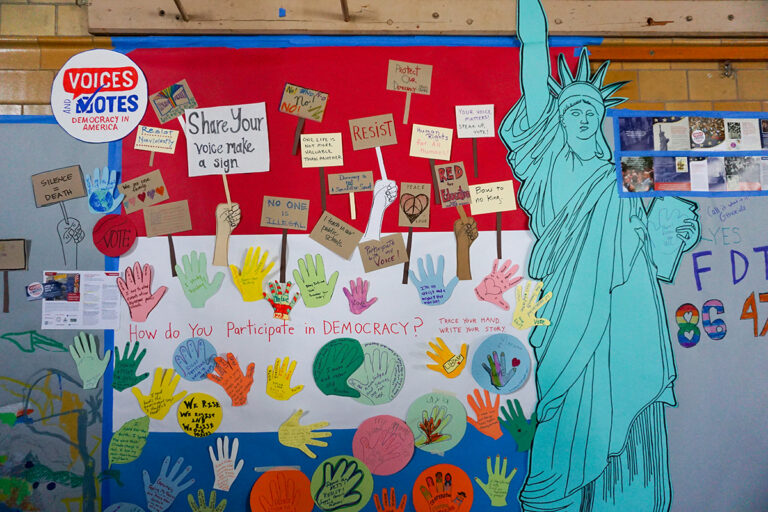
Massachusetts has long been a proving ground for expanding civil rights, from abolition to public education reform to marriage equality. Each generation has returned to fundamental questions: Who belongs? Whose voices matter? What responsibilities accompany democratic rights? The answers evolve through lawmakers and presidents, but also through petitions, journals, speeches, protests, podcasts, and social media posts that reveal a nation still striving to fulfill its revolutionary ideals.
Two hundred and fifty years after declaring independence, the question remains: What does it mean to be an American citizen? The answer is not fixed. As Massachusetts’ history shows us, it never has been. It is the work of every generation to seek that answer for itself. Ours included. Our recent birthday offers an opportunity to reflect on the role each of us plays in shaping the nation’s next chapter. Preserving and studying these first-hand accounts reminds us that history is something we continue to write. We now have an invitation to consider how the next 250 years will define citizenship, participation and the responsibilities we owe one another as Americans.